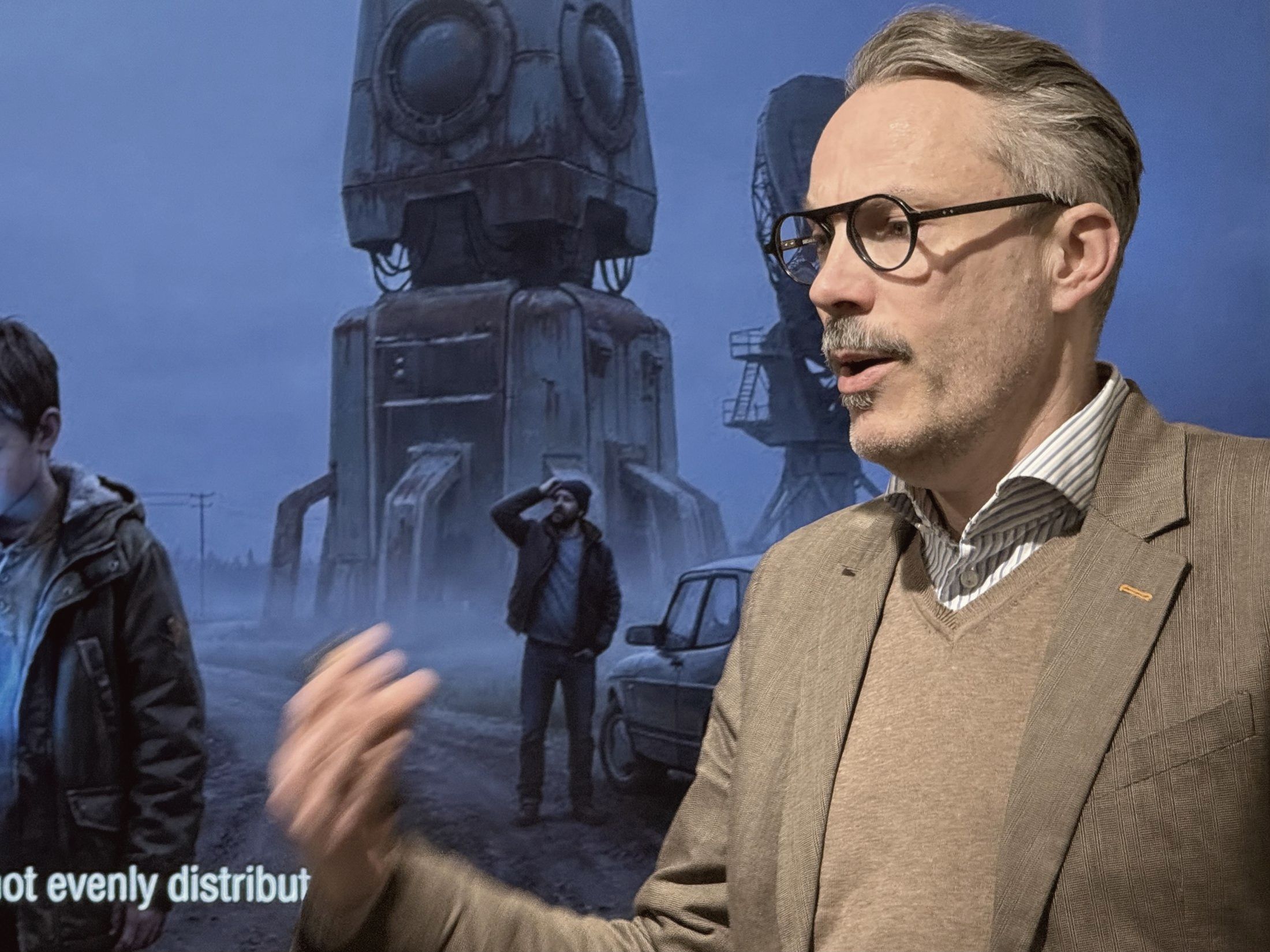
With help from outside, customer service, IT and marketing saw that they wanted the same thing.
Ving, Spies and Tjäreborg stand for holidays, sunshine and good days with the people you love. Behind the brands is Nordic Leisure Travel Group and a shared customer centre that looks after travellers before, during and after their trip. There, they had a problem many companies will recognise: everyone wanted to use AI more, and everyone was waiting for someone else to make the first move.
We listened to the different perspectives and saw where they diverged. Then we designed and facilitated a workshop where those perspectives could meet. There, customer service, IT and marketing saw that they wanted the same thing. Customer service took the lead, and the workshop arrived at a first step the whole group stands behind.
Part 1The case study
A familiar situation
The will was there everywhere. The customer centre had built a destination app and an email bot, IT had a virtual AI team and the group has an AI forum where the business and IT prioritise AI projects.
Even so, progress was slow. Customer service did not know what was possible in its own environment or how far the team could go on its own. IT had many priorities to weigh and saw a future where the business drives more of the development itself. Marketing wanted a vision for customer service in 2030. Each view made sense, and together they meant nobody took the first step.
Sound familiar?
The will to use AI is there across the organisation, and responsibility falls between the cracks. The business waits for IT, IT waits for a clear brief and both wait for a vision from the leadership team. Meanwhile, small solutions spring up alongside the official priorities, and the big gains never come.
How we built a shared view
A shared view has to be built, step by step. We designed the engagement around what this particular group needed.
- 01One-to-one conversations as the foundation We spoke to each person on their own: the head of the customer centre, the head of customer centre systems and processes, IT and marketing. The conversations showed where perspectives diverged: between vision and proof, and between central control and building close to the business.
- 02A workshop designed around what we heard We distilled the conversations into four areas to think in: ambition and the outside world, customer service and self-service, data and platform, and the everyday work of customer service advisers. The workshop started with the perspectives and let the target picture wait, so that everyone could describe their reality and hear the others’.
- 03A map of agreement the group filled in themselves The group tested what would have to be true to move forward, then filled in for themselves what they share, where they see things differently and what should come first. The map became the group’s own, in their own words.
- 04Analysis and buy-in We summarised the map and our analysis in a final report that keeps what the group said apart from our interpretation. A few weeks later, we went through it with the whole group, so the picture held beyond the workshop.
“It was more rewarding than I had expected. We set aside time to talk about this, and everyone got to say what they felt and thought.”
Terje Dahl, Head of Customer Center, Nordic Leisure Travel Group
What NLTG got
- 01Ownership Customer service took responsibility for what sits within its own remit: knowledge, frequently asked questions and internal processes. IT is there as support and a sounding board.
- 02A first step More data sources are connected to the chatbot, accuracy goes up and the impact is measured. The whole group stands behind it.
In their own words
“I realise that we in customer service may have sat waiting too long for someone else to take the lead, when we can drive the change ourselves.”
Terje Dahl, Head of Customer Center
“I can see more clearly now that it is we, in our team, who have to own this shift. We cannot wait for others. We need to find our own ways of working and take responsibility for making it happen.”
Katja Björlinger, Head of Customer Centre Systems and Processes
“I am genuinely pleasantly surprised at how aligned we are as a group. The will and the direction are already there. The challenge is how we move forward.”
Sami Breinholt, Head of Technology Services
The momentum continued after delivery
When we met the group again a few weeks later, customer service had already taken the next step. They were in talks with the contact centre platform vendor about the chatbot, had freed up more time for development work and had started sketching a business case for a logged-in mode, where travellers can see their own booking. Since then, customer service has connected two new data sources to the chatbot and is continuing to test more.
Facts
- Client
- Nordic Leisure Travel Group (Ving, Spies and Tjäreborg)
- Situation
- Everyone wanted to move forward with AI and was waiting for each other
- From the client
- Head of Customer Center (sponsor), head of customer centre systems and processes, IT, marketing
- Engagement
- A shared direction for AI in customer service, April to May 2026: one-to-one conversations, a workshop designed around them, a map of agreement, a final report with analysis and buy-in with the whole group
- Outcome
- Customer service took the lead, with a map the group owns and a first step everyone stands behind
Part 2Our analysis
Why a shared view matters more now
Klardager’s own assessment. This section describes what the work opens up for NLTG and for other customer service organisations in the same situation.
The outside world has changed the rules
Since the workshop in April, the travel industry has changed in two ways that make the question more urgent.
- 01Demand swings faster Events in the world can create peaks of questions about rebookings and travel terms within days. Customer service needs to handle the peaks without staffing going up and down with them.
- 02The journey starts in new interfaces Ving’s leadership has described a customer journey where the offer meets customers in AI-driven services beyond the company’s own website and app (Techtidningen, July 2026). There, the AI services need customer service’s knowledge of terms, luggage and destinations to answer correctly.
A shared view is the cheapest efficiency gain
When customer service, IT and marketing see different things as possible, every initiative becomes a new negotiation. In uncertain times, the most expensive thing of all is putting resources into initiatives that are later stopped. With a shared map, every idea is tested against the same picture from the start. That shortens the road from idea to decision.
A shared view needs careful design
Getting the group into one room is rarely enough. When perspectives differ, someone without an agenda of their own needs to listen to each person, see the patterns and design a conversation where the differences become useful. At NLTG, the group’s range, from optimism about the future and operational realism to IT expertise, became a strength when it came out in the right order.
What the first step can lead to
The first step the group chose is to connect luggage rules and facts about hotels and destinations to the chatbot. The information is already public, so customer service can take the step within its own remit. We see impact in three areas:
Better customer experience. Travellers get answers straight away, around the clock, to questions such as how much luggage they can bring. Nobody needs to phone and wait in a queue for that.
Better employee experience. Customer service advisers get fewer simple repeat questions and more time for changed bookings. Staff at the destinations, who also answer many customer questions, get more time for travellers who need their local experience.
Greater efficiency. Fewer calls about things customers can find out for themselves mean the same team goes further when the world shifts and enquiries peak. The impact is measured from the start, which gives customer service hard evidence when the next step, answers about the traveller’s own booking in a logged-in mode, needs IT resources.
What it means for you in the same situation
- 01As a head of customer service Do not wait for a finished vision. Find out what sits within your own remit and start there. It gives you measured results to bring to the next budget conversation.
- 02As IT close to the business The backlog shrinks when the business builds more itself on chosen platforms. Say yes in a way that makes it easy to build things right and securely.
- 03On the leadership team When the world shifts, you need steps that deliver this year. With a shared map, AI work becomes a portfolio of measurable steps, and the budget conversation can start from what has already delivered.
Our conclusion
What NLTG faced is common and hard to solve from within. With conversations that captured every perspective and a workshop designed to let them meet, the group saw that they wanted the same thing, and customer service stopped waiting. In an industry where things can turn in a week, an organisation that already agrees on the next step is worth more than a new plan.